

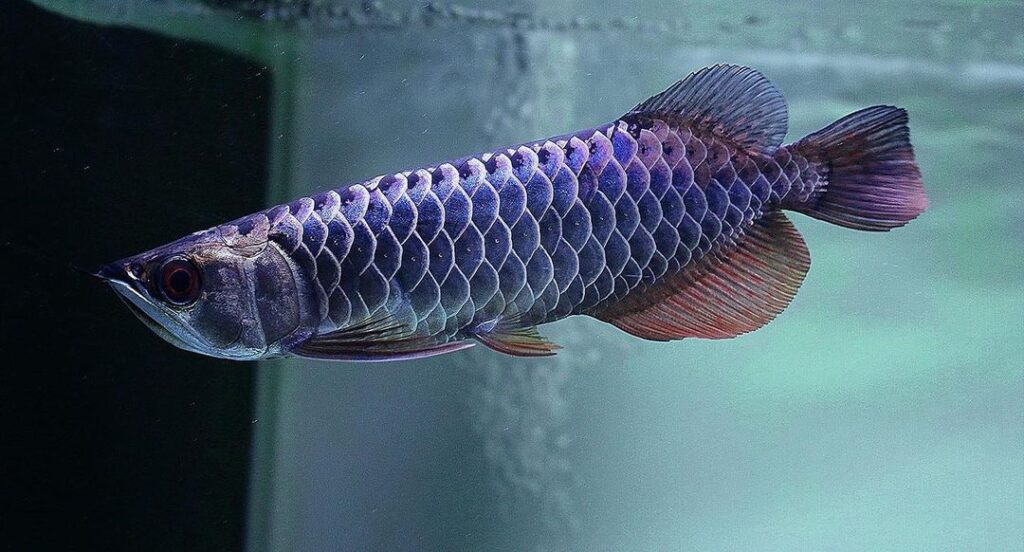
One interesting species in the aquarium hobby is the Arowana fish, sometimes known as the dragon fish. With native habitats in Australia, Southeast Asia, and South America, it has existed for hundreds of years.
Because of a toothed bone on their lower jaw that bites on the roof of their mouth, the fish are frequently referred to as “bony tongues.” The arowana fish has a lengthy body covered in huge scales, and two delicate, dark barbells protrude from its lower lips. Check this blog post to learn more about Arowana
Raising an Arowana can be costly because of its size and rarity. They require the specialized care of a skilled aquarist and have a 20-year lifespan.
The juveniles can be started in a 60-gallon aquarium, but as they become older, you’ll have to increase. The arowanas may become stunted and have a shorter lifetime if housed in a small aquarium.
Remember that the fish are naturally skilled jumpers, therefore you should always have a cover on your aquarium. If they are able to jump, they risk damaging their fragile barbells.
Are Fish Like Arowanas Aggressive?
Arowanas are carnivores that predate. In order to capture birds and insects from overhanging branches, fish in the wild are able to jump more than six feet below the water’s surface.
The fish in the tank exhibit this aggressive behavior, and they will consume anything that will fit in their jaws. They will engage in combat with their own kind in addition to attacking other species. When they are among other species of arowanas, they will usually become territorial.
With the exception of the black and silver arowanas, all arowanas are territorial. The larger the arowana becomes, the more aggressive it becomes. Maintaining multiple arowanas in one tank is difficult.
However, some aquarists have combined the arowana with Siamese tigerfish, jaguar cichlids, clown knifefish, stingrays, and peacock bass. The perfect tank mates should be too big to eat and should not harass the Arowana.
Which Arowana Has the Angry Nature?
In the aquarium trade, the Australian arowana is the most aggressive species. It is one of the two species of arowana that come from Australia and South Central New Guinea. It’s acclimated to billabongs, mild sections of streams, and crystal clear pools.
The Australian arowana can grow up to 36 inches in length in the wild, but in captivity, it will only grow to a maximum of 24 inches. Being one of the lesser species of Arowana, it will require at least 100-150 gallons
The reddish or pinkish patches that rim the edges of the Australian arowana’s scales give it a glossy appearance. It requires a large swimming area, and while driftwood can be added, few decorations are advised.
An intensely hostile animal, the Australian arowana will not put up with fellow arowanas in particular. Some people will not put up with any tank mates at all until they get to be 12–14 inches.
If you keep six to ten Australian arowanas in a large aquarium, you can keep them in an Arowana tank. Since most aquarists do not have access to these materials, keeping them apart is safer.