

Service dogs have been helping people with disabilities for centuries. However, their roles and responsibilities have evolved over time. Today, service dogs are not just limited to guiding the blind, but they also help people with various mental and physical disabilities.
Guide Dogs
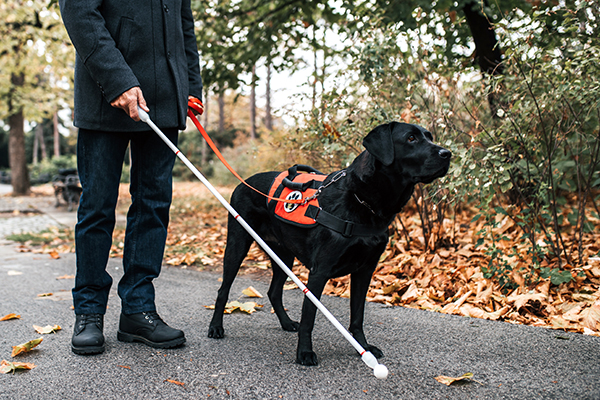
The first service dog was a guide dog, trained to aid the visually impaired. The first recorded instance of a guide dog was in the 16th century, where a physician named Johannes Kepler wrote about a dog that guided his blind friend. However, it wasn’t until the early 20th century that guide dogs became widely recognized.
In 1929, Dorothy Harrison Eustis, an American dog trainer, wrote an article about a guide dog she had trained and sent it to a magazine in Switzerland. The article caught the attention of a blind man named Morris Frank, who wrote to Eustis, asking for her help in training a guide dog for him. Eustis agreed, and Frank became the first person in the United States to use a guide dog.
Hearing Dogs
In the 1970s, hearing dogs were introduced to help people with hearing impairments. These dogs are trained to alert their owners to sounds such as doorbells, telephones, and smoke alarms. They are also trained to lead their owners to the source of the sound.
Service Dogs
Service dogs are trained to help people with physical disabilities such as mobility impairments, epilepsy, and diabetes. They are trained to perform tasks such as retrieving dropped objects, opening doors, and turning on lights. They are also trained to detect medical emergencies and alert their owners.
Emotional Support Animals (ESAs)

Emotional support animals (ESAs) are not considered service dogs, but they are still an important part of the evolution of service animals. ESAs are animals that provide emotional support to their owners. They are not trained to perform specific tasks like service dogs, but they are still able to provide comfort and support to their owners.
ESAs are commonly used to help people with mental health conditions such as anxiety, depression, and PTSD. They are also commonly used in hospitals, nursing homes, and schools to provide emotional support to patients and students.
The evolution of service dogs has come a long way since the first guide dog was introduced in the 16th century. Today, service dogs are not just limited to guiding the blind, but they also help people with various mental and physical disabilities. Emotional support animals have also become an important part of the evolution of service animals, providing emotional support and comfort to their owners. Service dogs and emotional support animals play a vital role in the lives of their owners, helping them to live more independent and fulfilling lives.